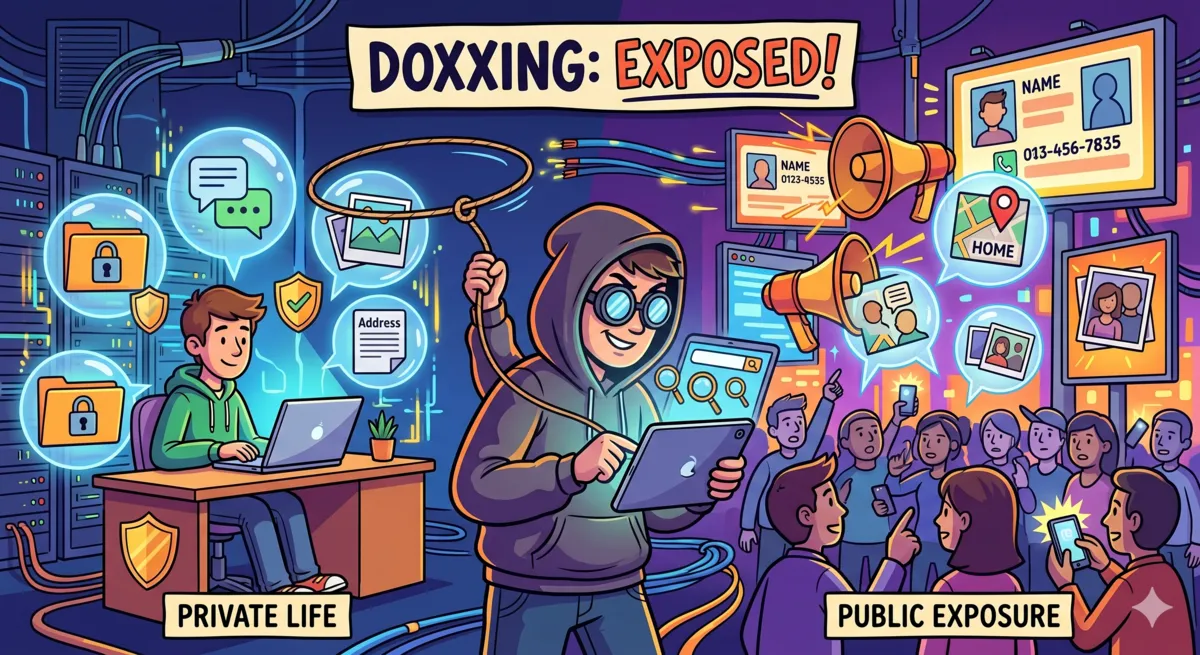
Doxxing, which is short for dropping documents, is the act of intentionally exposing an individual’s private or personally identifiable information online without their consent. This practice typically involves gathering data from various sources to reveal details such as a person’s real name, home address, phone number, workplace, or private messages.
The primary goal of doxxing is usually to harass, shame, humiliate, or cause physical and financial harm to the target. The term originated in the 1990s within hacker culture, where it was used to reveal the true identities of rivals who were operating behind pseudonyms.
-
How Doxxing Works
Doxxers use a variety of techniques to compile information about their targets, often starting with just a small piece of data. Some of the common methods include:
=> Tracking usernames across different platforms to build a profile of online activity.
=> Sifting through public social media profiles for location tags, photos, and family details.
=> Using reverse phone lookup services to find the name and address associated with a mobile number.
=> Analyzing file metadata in documents like Word or Excel to find author and company information.
=> Employing technical attacks like phishing or packet sniffing to intercept private passwords and data.
-
The Impact in India
In India, doxxing is not yet defined as a specific statutory offense. However, it can lead to serious violations of the right to privacy, which the Supreme Court has recognized as a fundamental right. While specific legislation is lacking, victims can seek remedies through tort laws, privacy laws, and certain sections of the Information Technology Act, 2000.
For instance, Section 66E of the IT Act punishes the violation of privacy by capturing or publishing images of a person’s private parts without consent.
-
Shaviya Sharma v. Squint Neon
A significant recent case regarding doxxing in India is Shaviya Sharma v. Squint Neon, 2024 SCC OnLine Del 1445.
In this matter, the Delhi High Court dealt with a situation where various individuals searched for and published the private information of a professional person with malicious intent.
=> The Court observed that although doxxing is not explicitly defined in Indian law, it can result in a breach of privacy rights.
=> The Court held that the acts of doxxing, if unchecked, could violate the right to privacy.
=> The Court directed the social media platform X to take down the offending URLs and reveal the basic subscriber information (BSI) of the accounts responsible for the alleged tweets.
This decision highlights the judicial stance that aggrieved parties in doxxing cases should not be left without a remedy.
-
Conclusion
Doxxing represents a major threat in the digital age because once personal information is released online, it is nearly impossible to remove. While Indian law continues to evolve, the judiciary has begun to step in to protect individuals from the reputational and personal harm caused by these malicious disclosures.
To protect yourself, it is recommended to limit personal details shared online and adjust privacy settings to ensure your information is only visible to people you know.